Reviews
|
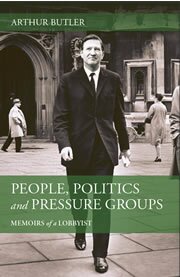
PEOPLE, POLITICS AND PRESSURE GROUPS
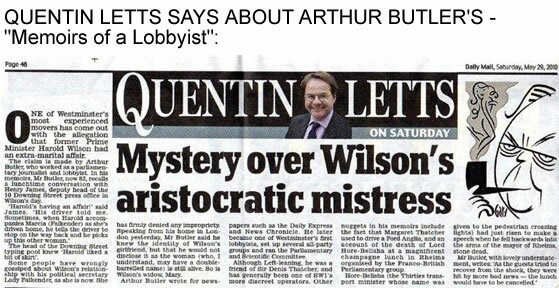
Memoirs of a Lobbyist
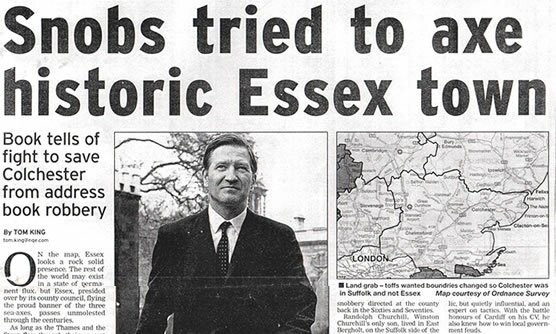
The London School of Economics & LSE Alumni Newsletter
Review from TOM EASTON, LOBSTER MAGAZINE:
“These tales from the Westminster journalist turned successful lobbyist fill in parts of our history necessary to grasp and digest if we are ever to
have genuinely ‘new politics’ in this sceptr’d isle.
Butler offers insight into the media world of Lord Beaverbrook – the Rupert Murdoch of his day in this country – and the political world of Hugh Gaitskell and his SDP followers
20 years after his death. As the founding brain behind lobbies for tobacco and the motor industry, and a pioneer of the development of expert parliamentary committees, Butler tells us much about the real world of business, science and politics.
Butler also took on local government reform and offered what aid he could to communities devastated by the loss of traditional employment, and to others at home and abroad needing support and encouragement. Along the way he has fascinating stories to tell about John Addey, James Sherwood, Joseph Godson, the Gang of Four and many more. He also had experiences of the intelligence services worth reading.
This is not an academic work, though academics could learn much from it. Nor is it just a collection of anecdotes from a long and fascinating working life. It is well-written British political life intelligently observed and reflectively considered.”
Review from IAIN DALE, Tory blogger, publisher and host of LBC’s nightly political programme
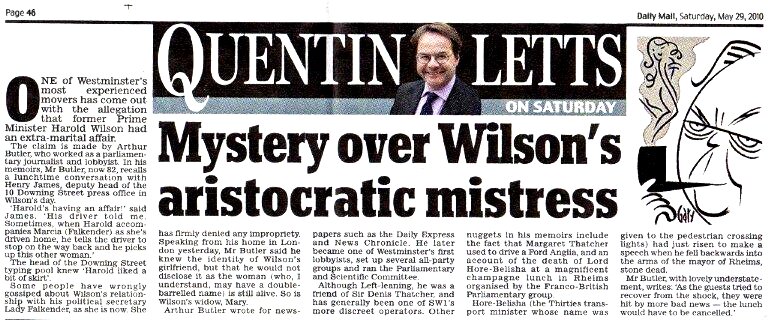
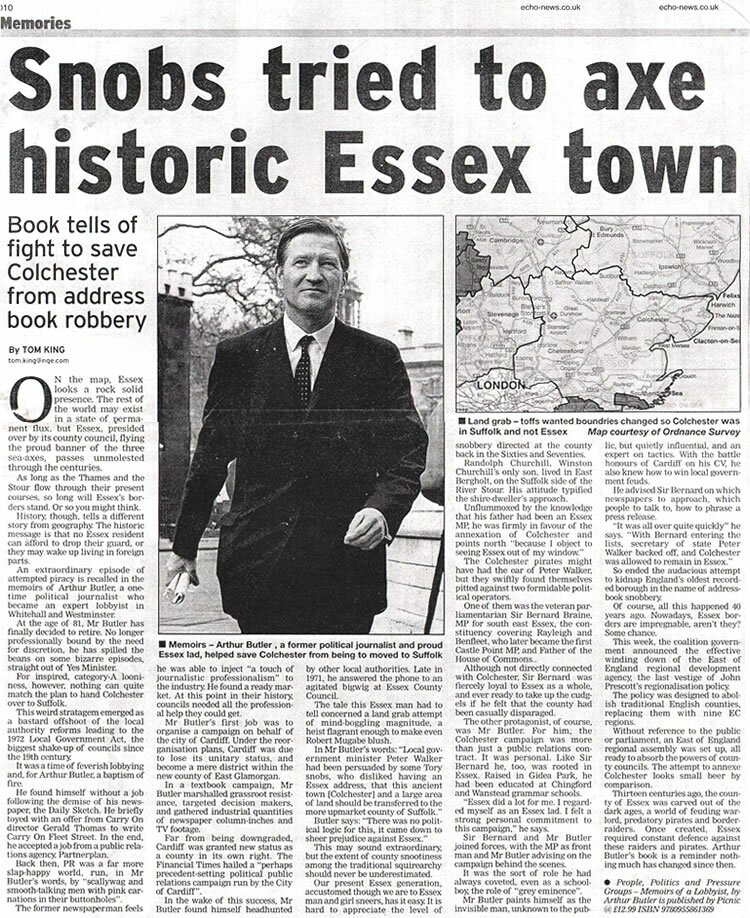
Almost exactly twenty years ago I started a new job working for Charles Barker, the big PR company. The public affairs division was called Charles Barker Watney & Powell. One of the mainstays of the company had been a man called Arthur Butler. He retired and was succeeded by Corinne de Souza. When Corinne left, they recruited me to replace her. I met Corinne seven years later when she became a customer of Politico's and she became a good friend. A few years ago Corinne started PicNic Publishing, which has recently published Arthur Butler's autobiography. With me so far?
Arthur Butler could seriously lay claim to being one of the first professional lobbyists in Britain and this is his story. He really is from the old school of public affairs consultancy. The book is littered with anecdotes of encounters with many of the famous political names of the 1970s and 80s. Butler started life as a journalist, but like many who came after him, he was persuaded the enter the 'dark side'. He joined a company called Partnerplan and proved highly successful in recruiting clients and persuading politicians to do what they wanted. He gives a fascinating insight into local government lobbying in the early 1970s and also the operation of All Party Groups. Indeed, the book is laced with anecdotes from various lobbying campaigns Butler has been involved with right up to the present day. In the mid 1970s Butler joined Charles Barker Watney & Powell and became joint Managing Director alongside the redoubtable Evie Soames, who was to recruit me to the company in late 1989. He stayed 15 years. I stayed three months. I hated it. I was bored out of my mind and hated the 'dating agency' side of the job. Vauxhall Motors were a client and I was deputed to arrange for them to meet Transport Secretary Cecil Parkinson. They were delighted to have their picture taken shaking his hand. The trouble was, they had absolutely nothing to say to him. I was used to running campaigns, not acting as a political pimp, so I quit. Clearly Arthur Butler found the whole political consultancy world rather more rewarding in terms of job satisfaction than I ever did.
This book really is a good read, if sometimes over detailed and somewhat lengthy. But it hasn't received the attention it undoubtedly deserves. If you're active in the world of political consultancy now, or have been over the last twenty years, it's a book you should definitely put on your Christmas wish list. I highly recommend it.
|
|
 |
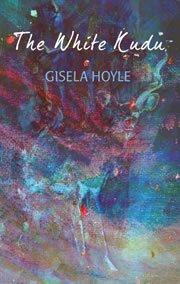
The White Kudu
Review from Dr Sarvajit Mukerji, Dept of English, University of Allahabad
The White Kudu is a book worth returning to. Multi-layered and richly nuanced, it narrates the story of a fractured land –South Africa, and the fierce passions it is capable of arousing. The intriguing word in the title, Kudu refers to a species of curly antlered deer native to the Karoo, the region where the land and the sands merge, on the margins
of the Kalahari. ‘The white Kudu’ is a myth of the San people, the original inhabitants of the inhospitable Kalahari. The story of the white kudu yearling, who fell in love with a star maiden but lacked the will to follow her into her own land, haunts the two geologists who come into Abelshoop at the behest of the Lefika Mining Company and leave behind a trail of destruction, both on the land that they dig and trench and the on lives of the women they love and leave.
Abelshoop, ‘with none of the cosiness of a village’, Pniel, ‘where Joshua wrestled with the Angel’, Wonderfontein, where the wonderful Radcliffe sisters live – names we give to places we love. Overshadowing them all the Witkopje, with its dazzling white quartz rock face painted with the kudu. The land is almost a character in the novel with the different characters representing various attitudes to it. Adam Vermeulen, the patriarch of Pniel can see the writing on the wall. It is time to sell off the land he has inherited from his forefathers. He knows that the white farmers have no chance in the land claims, and that henceforth he and his children must live as exiles on the land of their birth. He sees in the Lefika Mining Company a chance to do something for impoverished Abelshoop, for a mine would bring jobs and prosperity to the region. His son Abraham sees this as a betrayal both of his rights ‘to work the land’ as the legitimate heir of Pniel, and the interests of the white farmers who have their back to the wall. When his wife Esther is seduced by Hunter, Lefika’s geologist, his world explodes. For Lefika the land exists for exploitation to the hilt. It is a financial proposition for enriching the company while making the right, politically correct noises and gestures. Abelshoop may benefit, but that is merely a side effect, often called the ‘top down’ model in corporate parlance. White men, all. Yet the land belongs only to herself, irrespective of the people who love or wrestle with her, inscrutable and searingly beautiful, hiding within her womb the treasures and secrets that that men crave.
Hendrik’s link with the land is perhaps the oldest off all – he is of the San people. His ancestor, Kara/Tuma lies buried in the sands, the foetal position symbolically linking birth with death. Yet there is no possessiveness in Hendrik. In the skies above dwells the star maiden, the bird that flies there, is his ‘little sister ‘and on the land dances the white kudu, linking the ‘real’ and the ‘dream’ in one simple melody. Even his willed death is a celebration. With his death ends the wisdom of a people who knew how to live with and not on the land. Now their history and wisdom lingering on tantalizingly in the scattered rock painting in the desert have to be reconstructed by sensitive archaeologists like Sharon Shackleton. But she and Joshua Hunter must shed their selves and enter into new avatars before they can even attempt it.
That they can even glimpse this vanished world is a saving grace for the novel that otherwise veers dangerously towards a certain essentialism – the white men with their obsession to have and to hold, versus the ‘golden’ Bushmen, Hendrik, Klaas or Janine, non-acquisitive and wisely passive.
The greatest triumph of the novel is that it has the vision to look beyond the suffering of persons and peoples in a fractured land, towards healing – amazing, in a first novel. But perhaps one must experience the state of suffering before one can get even a glimpse of the way out –in sharing or transcendence or faith or whatever. And then comes the promised rejuvenating rain, for the exiled, longing kudu can go home at last.
|
|
|
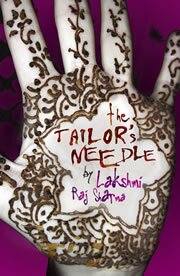
The Tailor's Needle
Review from Ann Northfield, Historical Novels Review
Set in India in the 1930s, this novel follows the fortunes of Sir Saraswati and his three children, Yogendra, Maneka and Sita, who have all been brought up in Western style of education by British governesses. The novel examines pre-independence India, the feeling of different people towards the British, and the movement towards autonomy. It slyly pokes fun at many aspects of British and Indian culture with a gently sarcastic style, as Sir Saraswati struggles to reconcile his admiration for the British with the ideals of Gandhi and the development of independent India.
The novel also looks at the role and status of women, contrasting the feisty and strong-willed Maneka with her more traditional mother and sister. The concept of caste and its role in the new India that is emerging is also considered.
The title refers to the belief of Sir Saraswati that his children should be like the needle of a tailor, passing through all kinds of cloth without discriminating, and this is a central metaphor throughout the book. The style is interesting and quite different. The dialogue is rather stilted, yet somehow this seems to suit the characters and the time well. It is something that the reader can adjut to quickly and it does not affect the enjoyment. This is an unusual novel that carries the flavour of its time and setting. Anyone who enjoys books about India would find this worth a read.
Review from Gisela Hoyle
Many new voices have come out of India recently, but the voice of Lakshmi Raj Sharma stands out nonetheless. The Tailor’s Needle is a novel on a grand scale seldom seen in modern writing: lyrical landscapes, a philosophical narrator, wayward daughters, a liberation struggle and political intrigue all form part of an elegant plot, which moves swiftly from family saga to comedy of manners, from gothic horror to murderous intrigue.
Sir Saraswati, named for the goddess of learning, the arts and creativity, struggles to find an appropriate balance between his admiration for the liberal ideals of British intellectual culture and his clear understanding of the greed and corruption of British Indian politics as he protects the province of Kashinagar and its royal family from annexation by the British empire and supervises his children’s education by English governesses. In a world of colliding cultures, he believes that education ‘should free one from prejudices. It should make one capable of independent thinking and prepare one for life ahead. It should make one adapt to his world without being difficult with others or miserable himself. It should make one positive and sociable. It should make one what he called ‘the tailor’s needle.’’ (p20)
His son, Yogendra, is eager to absorb this philosophy, while at the same time unable to escape from his father impressive shadow. His sister, Maneka is more rebellious and independent, but gets herself involved in fairly archetypal princess problems all the same – remaining trapped in a world not that different from Jane Austen’s: of arranged marriages as opposed to love matches, of suitability in suitors, of feminine accomplishments. The novel is, after all a final adieu to the great Indian Raj novel, honouring traditions now faded and, for many modern readers probably thankfully, consigned to the pages of history.
Sir Saraswati wore his tweed coat and grey worsted trousers. Summer evenings in Dehradun tended to be chilly in those days. Fans were never used and fridges were unheard of . . . when an unknown friendly person invites you and you are on your way to meeting him and knowing him, there is an inexplicable joy in your visit (p120).
But the novel is anything but nostalgic for the colonial past, which was problematic in itself and has left behind it many more. And though the language in the novel is often seemingly naive in this way, the reader is warned early on not to take the language lightly:
The British were sometimes casual when they wrote to the natives of India. When they wrote to their colonised subjects, they seemed to imagine that history was speaking through them. The Englishman often got into a fitful expressiveness in which the language was more important than what it was meant to convey, becoming rhetorical and even artificial at such moments. The same Englishman, however, could use his language very naturally when he spoke for himself, in his true voice. But it was his language, which he had the right to use anyway he liked. It was only the Indian who had to be careful in its use (p14).
So underneath the lyricism there is a constant awareness that the narration is in the language of a conqueror, who is both arrogant and smug. Beneath the genteel and graceful world of the Ranbakshi family is the fragility of power within the empire, beneath the ludicrous figure of the viceroy Mortimer Edmund Griffin-Tiffin and his ugly dominating mother is the sinister truth that such people still populate the upper class of England, and beneath the elaborate horror of Nadir Palace lies the truth of abusive relationships and paranoid obsessions. And the apparent naiveté is deeply ironic, through all the experience of the novel runs the concern with justice and freedom: from imperialism, from overbearing parents, from caste rules and from prejudice. What The White Tiger does with brilliant savagery, The Tailor’s Needle does with elegance and wit: presenting complex and authentic experiences of another world with thoughtful compassion and with humour.
|
|
|
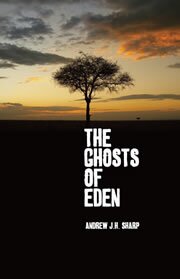
The Ghosts of Eden
Review from Anne Widdecombe MP
'This deeply moving book will leave you thoughtful for long after you have read it.' Anne Widdecombe MP
full review from Anne Widdecombe in thebrowser.com >>
Review from Andrew Crofts
Green Shoots in Publishing Landscape
Due to visit Uganda for the first time, I wanted to do some background reading. On Amazon I typed in the word “Uganda” and the great machine suggested a number of titles that I had not heard of. I did a little more googling on each title that looked possible and made a selection. I did not have particularly high hopes, which is why it was all the more wonderful to find I had accidentally ordered a masterpiece...
Continue reading: http://andrewcrofts.blogspot.com/
Review from Jackie Bailey
The Waverton Good Read Award
Last year I raved about The Ghosts of Eden. It is a wonderful book about twin boys growing up in Uganda. The author, Andrew Sharp, is a medical doctor and so it is packed with all those intelligent observations about life that doctors seem to acquire in abundance. The book ended up on my top ten of 2009 list...
Continue reading: http://www.farmlanebooks.co.uk/?p=5186
Review from Yasmin Alibhai-Brown
'The delight is in the detail of this book. It brought to me pictures of Uganda and that feeling you always had there of life beyond this life, whispering, beckoning, interfering. Reality and myths reinforce each other as the title suggests and you are left feeling the vulnerability of humanity.'
Review from Lesley Mason, The Book Bag
Ghosts grips the reader subtly, by force of personality: the personality of the main players, and also of the place itself. A stunningly haunting debut…
Superb debut novel from a writer and medical doctor with an experience of sub-Saharan Africa that is put to hauntingly lyrical and occasionally violent use in a tale of childhood, loss and adult love.
full review in the www.thebookbag.co.uk
Review from Jackie Bailey, Farm Lane Books Blog
I highly recommend this to anyone who wants to read about African culture, without battling with symbolism or the endless horrors of war. It is a beautifully written story, and I think it has just become my favourite book with an African setting.
July 2nd 2009: I would like to ensure I’ve read all the best books published in 2009 before the year ends, so I thought this half way point would be a great point to compare notes and make sure all the best books are in my sights.
Here is the list of my favourite books from 2009 so far:
http://www.farmlanebooks.co.uk/?p=1983
Review by student union magazine TheFoxxHunt
This novel is most definitely an intriguing one. For those of you who like reading specific genres, be prepared to be amazed as this story fits in all the various genres.
www.thefoxxhunt.com
Reader comments from The People’s Book Prize:
A beautifully written book. Sensitively observed. A must read for anyone who loves Africa.
A gripping story with an excellent beginning, and continuing with authentic medical and spiritual insights. Brilliant!
Reflects the author's background in Africa, and deals sensitively with issues raised.
Evocative, thoughtful, moving - the author gives us the true Uganda not the Amin one.
This book richly deserves a wider audience
Captivating book and difficult to put down. It clarified and informed beautifully on the spiritual world of traditional African tribal beliefs, whilst illuminating the life of ex-pat families. Lovely use of language.
Having lived in Uganda and been to boarding school myself I found it so emotive. A beautifully written, unique book
I loved this book. I was gripped from the opening pages. Fantastic imagery and insights - I felt like I really got inside the characters.
Memorable exploration of the emotional and spiritual worlds of traditional Africa and colonialists: different on the surface but driven by the same uncertainties. Against this background one man returns to Africa, falls in love, and is forced to face his past. In doing so he painfully reaches a new awareness of his own deeper self and is able to mature beyond his previous emotional limitations. Moving but not sentimental, a story referenced to the past but very relevant and fitting to the 21st century.
Fantastic story.
A rich and evocative read with sensitive insight into the developing minds of young children in a clash of worlds. Tribal and colonial, missionary and ex-pat, boarding school and kraal communities are mixed together in the commonalities of love, disappointment and loss in a way that convinces and intrigues.
Really enjoyable read.
The synopsis given is for the prologue only! The book is SO much more. It's divided into three sections: the story of two African brothers growing up, the story of Michael as a missionary boy, and the story of Michael returning as an MD to Uganda. My favourite was the first part with beautiful insights into the African mindset, such as their concept of time. A worthwhile read.
Drawn in from the very first chapter!
Excellent book. One you can read again and again
Beautifully written characters with a captivating story. Read during every spare moment!
Wonderfully interesting book.
amazing book! love it!
Magical language. Wonderfully drawn characters. Fascinating narrative that stops you from putting down this book before you've read it from cover to cover.
Evocative writing, an absorbing novel which touches the emotions.
Brilliantly written. Fascinating insights. Loved it.
I could picture the sights, sounds and smells of Africa through this beautifully written book. The main characters came to life though the narrative and I was truly sorry when my journey with them ended.
A 'must read' by an author who knows his subject!
A great read. We lived in Uganda for a number of years and the book had us remembering those wide skies of the highlands and we could almost hear the music of Africa.
Fabulous insights into Africa and a wonderful mixture of emotions.
Great book. Humorous, interesting and very evocative.
Reading the book was like going on an amazing journey, and I found it difficult to put the book down.
Wonderfully evocative story with human and family drama lived out in Africa. The hold of family and Africa itself tells a powerful human story
I loved this book! The author perfectly captures the minds of the two boys, and to be able to do this convincingly with two completely different cultures is an outstanding achievement. It is my favourite book with an African setting! I really hope it wins.
It made me laugh and cry and so much rang true with my experiences of Africa.
http://www.farmlanebooks.co.uk/?p=1681
*New* The Ghosts of Eden website >>
GHOSTS OF EDEN launch party in Zimbabwe >>
|
|
|
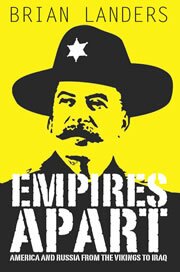
Empires Apart: America and Russia from the Viking to Iraq
by Brian Landers
Peter Wilby, New Statesman
“The tales of torture, reckless bombing and murder of unarmed civilians in Iraq contained in the latest WikiLeaks documents led not to soul-searching in America, but to complaints about the comfort they may give to present and future enemies. Americans have never been good at self-criticism, a point illustrated by US censorship of a fascinating book I am currently reading, Empires Apart. The author, Brian Landers - hardly a loony lefty, but a former senior Home Office civil servant who has also worked for several multinationals, including Penguin Books - argues that America's development has remarkably close parallels with Russia's. Both built an internal empire, partly based on ethnic cleansing, before they created an external one, Russia's being presented as an extension of socialism, America's as an extension of freedom and democracy. Both opted to create client states rather than to rule directly in the conventional imperial manner.
“Landers notes that Americans have a habit of wiping inconvenient events out of history. Bloody Sunday, 1905, when the Russian tsar's troops fired on demonstrators in St Petersburg, killing about a hundred, is quite widely known. An equivalent event 16 years later in Tulsa, Oklahoma, when the National Guard sprayed black protesters with machine-guns, killing (according to modern research) about 300, is almost forgotten. All this is succinctly explained in Landers's introduction, which provides the framework for the book. Distributors of the recent US edition, published by Pegasus, initially refused to handle it because of its "anti-American sentiments". They reluctantly agreed only when the introduction was deleted.”
Matthew Bell, The Independent on Sunday:
‘ ................ Anecdotes of British culture being rebranded for the American market are legion – The Madness of George III became 'The Madness of King George' in case thickies wondered what happened to Parts I and II. But it still came as a shock to the historian Brian Landers when a vital swathe of his book 'Empires Apart', a comparison of America and Russia, was cut for the US version, to avoid hurting American sensibilities. "It's not anti-American," he tells me, "but they didn't like the parallels I drew with Russia. Funnily enough there's a bit where I compare the way the two countries treat dissidents: in Russia they put them in mental asylums or shoot them; in America they just don't publish them."
ENDORSEMENTS FOR EMPIRES APART
LOBSTER 57
Moscow on the Hudson?
John McFall
Is America an empire? Tsarist Russia and its Soviet successor were certainly seen as such through western eyes. That America is not shows the heavily ideologised world through which we frame history. In a bold sweep of historical comparison of the two world titans, Mr Landers attempts, in his first major work, to correct such ideological distortions in an agnostic, sardonic and wonderfully written treatment of his subject. Juxtaposing Russia’s avowedly imperialist history with anti-imperialist America he demonstrates the ‘continuity of empire’ in each nation’s seemingly incongruous histories in a convincing, skilful presentation of their similarities yet fundamental differences.
This is a great book. Topical, thoroughly enjoyable, and packed with information and interpretative controversy. Read more >>
DOUGLAS BOARD Chair, Refugee Council
(review first published in the monthly magazine of the British America Project)
**Amazon tells me that people who bought this also bought ‘The Bourne Identity Ultimate DVD Boxset’. I rather think not ... I am sure a number of BAP Fellows will be interested in this book. In his foreword, Andreas Whittam Smith lauds this ‘piercing account’ of American history which explores a comparison between American and Russian expansion through the centuries. Brian Landers’ thesis is challenging, a story of two surprisingly similar manifest destinies. See www.empiresapart.com for more. I’m particularly delighted to recommend this since Brian is only in the process of ‘coming out’ as a writer, wrapped inside a commercial finance director. Some years ago he was both brave and foolish enough to let me recruit him as finance director of the prison service, so he really does know the meaning of the word ‘challenging’.
A note by Andreas Whittam Smith, founding editor, The Independent:
Brian Landers has written a piercing account of American history from its colonial beginnings to its present role as an unacknowledged empire that bestrides the world. Concerned as he is to expose the myths that nations create about themselves, he bases his analysis upon a revealing comparison of American and Russian expansion through the centuries. This technique forces the observer to recognise similarities, identity differences and question why both similarities and differences exist. In a sense, then, the reader gets two books for the price of one, Russian history as well as American.
The parallels are striking. In the very same decade, the 1860s, Russia emancipated its serfs and the US freed its slaves. The ideology of corporate capitalism emerged at the same time as Marxism. Both nations marched towards the Pacific from their ancestral lands, from the Thirteen Colonies in the one case and from Muscovy in the other. Both reached the ocean by conquest of nomadic tribes - or as Americans like to say, by ‘settlement’ or ‘colonisation’ or, occasionally, by ‘annexation’. And finally, to take a question, was there really any difference between the Monroe Doctrine that America used to justify its interventions in Latin America and in the Caribbean and the concept of ‘Pan-Slavism” that Russia prayed in aid when exercising its designs on the Balkans?
This approach leads to a major theme of Mr Landers’ work, that the US is and always has been an imperialist power. Americans act like imperialists, he writes, but don’t talk like imperialists. It isn’t even an established ‘fact’ that there is or ever has been an American Empire. What is a fact, however, is that since the US marines invaded Libya in 1805, American troops on average have intervened somewhere abroad more than once a year.
Mr Landers is not a conventional historian. His skills are derived from a business career as well as from the academy. This unusual combination produces rare insight. He also has a way with aphorisms. ‘Russia is an inferiority complex trying to find itself. America is a superiority complex trying to sell itself.’ That is what ‘Empires Apart’ seeks to demonstrate.
Tim Waterstone, founder, Waterstone’s Bookshops, writes:
'A most enjoyable and intelligent book. Brian Landers constructs a tightly argued analysis, and never loses a beguiling narrative drive.'
Mark Ellingham, founder, Rough Guides, writes:
'The American and Russian Empires deserve a Rough Guide – and Brian Landers’ book is that, and more.'
Sir Roger Martin, founder, Index Books and Quality Books Direct, writes:
'Simply staggering in vision, depth, development of ideas and detailed research. And it's also very readable and approachable. The analysis along the way is very revealing and a challenge to accepted thinking.'
Brian has recently launched the Empires Apart website: www.empiresapart.com
|
|
|
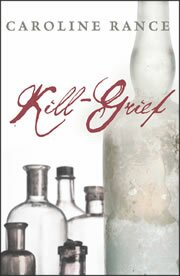
Kill Grief
Review from Karen Baston, University of London
Caroline Rance’s novel is a tale of addition set in Chester in 1756. It is also a mystery which allows its story to unfold via flashbacks and cleverly placed clues and references. The first few pages are deceptively simple. You think you are reading something to set the stage while you are enjoying some excellent descriptive passages. But later on you realise that returning to those first few pages and re-reading them would be a very good idea indeed.
Click here to read on this review ( full review PAGE 49)
Review from Anne Brooke, The Bookbag
“Mary Helsall began work as a nurse in Chester in 1756, but she was rather impatient and caring for others didn't come naturally to her. Her solution was gin and oblivion - and a volatile relationship with a hospital porter, but it was only when a diseased beggar came to the hospital for treatment that it became clear that Mary had secrets to hide.
This debut novel is by a very talented author indeed. The front cover bears the legend jolts the reader into Hogarth's world with a vengeance - and this exactly encapsulates the breadth of the novel. In many ways it was a disturbing read (not one to be read late at night!), due to the very vivid descriptive scenes. Admittedly, the horror and squalor of the environment was one of the many strengths of this wonderful novel, but I personally could only manage to read it a few chapters at a time - it's certainly not a novel for a squeamish reader.
Interspersed in the main storyline, we have alternate, brief chapters which give us glimpses of Mary's former lifestyle. Based in a coastal village nearby, she and her husband were involved with the local smuggling ring, and this is fundamental to our understanding of the situation in which they now find themselves. These chapters are brief, and give minimal detail - almost a snapshot of their former life. Information is fed to us slowly, but consistently, and so we build up a well rounded portrait of their earlier life.
But these scenes aren't as evocative and 'real' as the scenes which unfold in Chester. The city truly comes alive, with scenes, smells, tastes all being virtually palpable. The city becomes a character in its own right, and Rance's descriptive scenes are excellent - we literally feel as if we're walking the rows with Mary - I jumped when she was accosted! The more detailed scenes which unfolded in the hospital and jail were simply stunning. A few words managed to paint a very vivid and frightening portrait of these institutions, their inmates and gaolers - indeed theses terms would apply equally well to either of the institutions.
As the central protagonist, Mary is wonderful. Initially overwhelmed by the city, she gradually grows in boldness and stature. She's an extremely complex character, and I was often surprised at her actions. Emboldened by her increasing reliance on gin (the 'kill-grief' of the title), she becomes progressively more devious in her fight for survival, and towards the conclusion of the novel, she is a very different character to the almost timid girl of the outset.
Her relationships, past and present with the other characters - male and female - also add to the enigma. In her native village she was envied, and indeed, on her arrival in Chester, appeared almost as a slightly aloof character. Females envy her, males are drawn to her. What is the secret behind her relationship with the hospital benefactors… why does she turn to the porter for comfort… how much of her earlier life can we believe, or was some of it mere fantasies… so many meaty dilemmas to ponder in this wonderful book.
The other characters are very well depicted. The lecherous surgeons, the domineering matron, the weak porter, and the enigmatic Hartingshall: all play vital roles in both the development of the plot, and Mary's difficult journey. Sympathies abound for many of the characters - even the dislikeable ones.
Overall, this was a wonderful novel. The plot was well developed, and progressed at a good pace - quick enough to keep the reader turning the pages, but slow enough to keep us guessing. The characters were magnificent, encouraging us to sympathise with their ghastly lifestyle, and simultaneously back away from the squalor they represented. There was no part of this novel which I can fault - it was simply a great read, and I do hope the author writes more in this vein - well done Ms Rance!
I'd like to thank the author for sending a copy to The Bookbag.
If this book appeals then you might also enjoy The Journal of Dora Damage by Belinda Starling.”
Review from Anne Brooke, Vulpes Libris
“From the very first sentence, this book wraps you round in a coat of darkness, tension, low-life street horror and kick-ass descriptive poetry strong enough to obliterate several countries and still have time for a gin or two.
I loved it.
After all, any first page in a novel that has this paragraph in it gets my vote:
Cursing drivers, bellowing poultry hawkers, beer-fuelled brawlers – the city seemed made of gaping mouths. Stumps of teeth as rotten as taters, gums mashed by scurvy, noses crumpled by the pox. Mary squeezed round a horde of men outside a tavern, their armpits level with her nostrils. Beyond their oniony heat and the blast of ale fumes, the air chilled her face.
Really, what’s not to love? It’s heaven. Kill-Grief tells the story of Mary Helsall, who arrives in Chester in 1756, carrying her own bitter secrets but determined to carve an independent future for herself, despite the variety of men who lay claim to her, body and soul. Frankly, this is how historical novels should be written – with the setting so densely and sharply described that it becomes a character in itself. For it’s the quality, intensity and sheer poetry of the writing that captures the reader and doesn’t allow them to leave until the very end. In fact this key aspect of the novel reminds me of the writing of DH Lawrence – and, like his work, it’s best to savour the experience of reading rather than rush through it.
But let me turn to Mary. It’s great to find a strong female character who fits into her world and historical setting perfectly well (ie it’s not a case of a modern gal transported into a period piece, which is always irritating) but who still possesses her own independent thought processes that don’t jar with the age she lives in. That said, she’s not an overly likeable character, but really that suits me just fine as I don’t like overly likeable people. Either in fiction or real-life. She has reality and depth and an overwhelming sense of being more than the sum of her parts, and that’s really all I want in my novel characters. And she’s strong enough to carry both the velvet weight of description – seen of course all through her eyes – and the mysteries and tension of the plot. There is one small part of the novel, however, that doesn’t quite ring true; Mary’s relationship with Anthony, the porter at the hospital where she works, seems to start far too early for the character, her story and the traumatic emotional history she carries with her and which we only discover more about later on. I personally think it would have been better for Mary not to have fallen so instantly in love with him – it just isn’t her, not after what she’s been through and the things she knows she has to face. It would have been more believable and more solid for the friendship/relationship with Anthony to have been allowed more room in the novel to breathe and find its own pace. What we have now seems a little forced.
Which brings me to the men in the novel. Kill-Grief is primarily a novel about Mary Helsall and Chester. Those are its main purposes. And it’s brilliant at both. But there are three key secondary male characters who are also a part of the whole: Selwyn, Mary’s imprisoned husband; the porter Anthony; and Bryce Warbreck, the shadowy man in Mary’s past who changes everything. Of the three of them, it’s Selwyn who seems most alive and real, even though he doesn’t appear very often within the book. I was wondering why this should be, and I think part of the reason is this: Selwyn is in prison in terrible circumstances and it is in describing these conditions that Rance’s gritty poetic writing style truly comes into its own. The grimmer the setting and the more desperate the people, the more grounded they become under her pen. There is an inextricable link between character and how character is described that hits the reader right between the eyes and is impossible to ignore. As a result, the rather less desperate (though of course not actually happy) characters of Anthony and Warbreck perhaps lose something in the telling. In addition, in the case of Anthony, his reality is weakened somewhat by his too-quick introduction as Mary’s new love interest and I do also think that this is not a novel about love. It’s a novel about women and the survival of women. Mary is far more vital than any of the men around her, and rightly so. It does here remind me (though the genres are hugely different!) of the Jasper Fforde Thursday Next series of fantasy novels where Thursday’s relationship with her husband (whose name I cannot even remember – a point in itself I feel …) just gets in the way of her story and character. I do wonder what would have happened – and just how even more powerful the character of Mary might have been – if Anthony didn’t in fact exist, and Mary’s story was one of slowly removing herself from the influence of both Selwyn and Warbreck alone. Something in my head keeps telling me that the wonderful Mary is in fact at her essence a woman who has learnt and is learning to survive without love and on her own, even in those historical times. An interesting thought anyway.
Incidentally, I couldn’t review this novel without saying that it’s a delight to be in the presence of so much appropriate vomit. I do think the appearance of sickness in the modern novel is a thesis just waiting to be written – and if anyone out there would like to tackle that multi-colour subject, then this novel is the one to start with. Here, as Mary is a nurse, the vomit is entirely to be expected, and in her struggle with her – and Anthony’s – gin addiction, it also perfectly naturally makes its appearance known. And more power to its gut is what I say. There should be more of it – though I do appreciate this is an entirely personal view.
So my overall opinion is that, despite very very minor reservations here and there, this novel is a five-star class act. It’s an astonishment (though sadly not an entire surprise in these difficult publication times) to me why it hasn’t been picked up by a more mainstream publisher, and huge applause to Picnic Publishing for choosing it. It’s dark and rich and bitter, and you won’t regret the read. When Rance publishes her next, I’ll be first in the queue.”
|
|
|
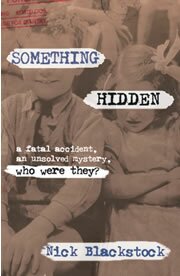
Something Hidden
Charfield rail crash mystery
Tuesday, August 18, 2009, 07:00
Gerry Brooke delves into a new fictionalised account of a mystery that had never been solved –the identity of two children who died in a horrific rail crash 80 years ago
The tragedy happened one foggy October morning in 1928.
The mail express train from Leeds to Bristol was due to pass through the South Gloucestershire village of Charfield at about 5.30am
On board the steam train – hurtling along at more than 60mph – more than 50 passengers were either dozing or sleeping.
The signalman accepted the train down from Berkeley junction but moved another signal to danger to halt it until a freight train on the same line had reversed into sidings.
But in the thick fog both driver and fireman on the express read the distant signal as clear.
The goods train driver had almost cleared the line when he saw the mail train bearing down on him at full speed.
There was no stopping the tragedy. Read more >>
Customer review from the Amazon Vine™ Programme, November 2009:
'Something Hidden' had me gripped from the very beginning. I think the fact that it is based on true events made it all the more fascinating than if it had been a work of complete fiction. It raised many questions for me, and the main one is still unanswered. So was it a complete cover-up, or was it a series of unfortunate coincidences? Was bribery involved, or was more made of the case than should have been? Of course, the BIG question - whodunit? - is a matter of conjecture, however, the author gives their own take on this. It's beautifully written, easy to read, and totally absorbing. It is also very sad, in that these children were never claimed by anyone, and it reflects badly on society at the time I feel. Thoroughly recommended.
The train crash, the child victims and a baffling 80-year mystery
By Sarah Freeman in the Yorkshire Post
It's a mystery worthy of Agatha Christie.
In the early hours of October 13, 1928, the Leeds to Bristol night mail train was making its way quietly towards its destination.
The fog that night was thick and as the train, with 50 passengers on board, passed through Gloucestershire the driver and his fireman didn't see the warning signal ahead.
Within a matter of seconds, a routine journey had turned into a national disaster. Ploughing into a freight train, one coach was thrown across a bridge and when the gas cylinders used to fuel the lights exploded on impact, the 40ft high flames could be seen from miles around.
Emergency services arrived quickly on the scene, but for many of the passengers it was already too late – 12 of those who died were so badly burnt their families accepted the railway company's offer of a mass grave. For those involved in the rescue operation, the scene was grim, and when the bodies of two young children were discovered among the wreckage they knew someone would have the unenviable job of telling their relatives their worst nightmare had come true.
However, no one ever did come forward. One witness described the pair as well-dressed. Another told police officers they thought the boy was about 10 years-old; the girl, they said, looked a little younger and they had assumed they were brother and sister.
Despite high profile appeals, the pair were never identified and as the years passed the case passed into folklore.
"It's an intriguing tale," says Nick Blackstock, author of Something Hidden, a fictional account of the crash and its aftermath. "I first came across the story when reading the memoirs of the coroner who carried out the inquests and I always thought it would make a fascinating basis for a novel."
In the months which followed the crash, various theories were put forward as to the identity of the two children and some even doubted the bodies had existed at all.
Nick admits trying to get to the truth of what happened 80 years ago is impossible and his novel, which suggests their deaths were part of a cover-up of the very highest order, was completed with a large helping of artistic licence.
"At the time of the crash it was still very much the era of the Empire when many wealthy parents lived and worked abroad while their children were educated here," says Nick, who lives in Keighley. "At first, people thought that was the case with these two children, but no mother or father ever returned demanding to know where their children were.
"There were suggestions part of their school uniform had been found. Apparently, it bore the motto Luce Magistra which is the one used by Queen Ethelburga's near York, but the school always denied any connection to the children.
"The mystery generated an avalanche of letters to newspapers and it was from these the truly off-the wall suggestions emerged. One suggested the remains which were found were in fact those of two ventriloquist dummies and another claimed they were not children, but jockeys.
"For years afterwards a lady in black was also seen visiting the Charfield cemetery laying flowers at the memorial to the two unknowns, but of course no one thought to ask who she was. Rumour had it a Gloucester solicitor also had crucial information about the crash, but like all good mysteries he died without ever telling anyone what he knew."
Having studied history at university, Nick has always had a fascination with the past and his first book Beast was inspired by the true story of a wolf that terrorised southern France in the 18th century. Something Hidden may be set in a different time and place, but it's fuelled by the same sense of mystery.
"There's always a worry when you're writing about historical riddles that before you've finished the final draft someone will come forward and reveal the truth," says Nick. "Thankfully, no one seems to be able to throw any real light on either of the mysteries I've written about and for that I am very, very grateful."
http://www.yorkshirepost.co.uk/features/The-train-crash-the-child.5523137.jp
|
|
|
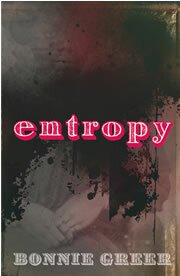
Entropy
Review from Alice Palmer, Illinois Politician
“Entropy just arrived and I have been reading it ever since. You are a helluva writer, Lady. As well as your keen sense of the ironies, foibles and contradictions of human lives, particularly those of Black folk, there is a wicked sense of humor underlying it all.”
|
|
|
Too Little Too Late -
the politics of climate change
Paul Hampton, LABOUR RESEARCH writes:
TOO LITTLE, TOO LATE: THE POLITICS OF CLIMATE CHANGE: Labour MP Colin Challen is one of the few politicians with a credible record on climate change. This book offers a Westminster-eye view of the government's approach, written from the perspective of a loyal dissenter. It is particularly scathing about the reliance on market mechanisms to solve climate change. The author argues that higher prices will not necessarily reduce emissions. Last year, the rise in prices drove firms to explore oil sands and other difficult-to-reach reserves, and reignited demand for coal. Similarly, Challen has no faith in emissions trading, the centrepiece of national and international efforts to control emissions.
He argues that it is the private ownership of energy utilities that makes it harder to tackle climate change in the UK, and urges a renewed discussion about public ownership.
Early in the book, the author poses the question: Where does the power to change things really lie? However, Challen's answer - largely a cross-party consensus in Parliament and individual personal carbon allowances - appears to forget the valid arguments put at the beginning of the book of why it's "too little, too late".
A labour movement based campaign would be a far more serious proposition for saving the planet.
Labout Research Department www.lrd.org.uk
Review from 20SustainableBuilding, February 2009:
'Labour MP Colin Challen, who retires at the next general election to spend more time saving the planet from climate change, has written a very pessimistic new book on his experiences as a politician in trying to bring some urgency, rationality and sustainability to energy policy. Despite its pessimism, Too Little, Too Late is well worth reading.
Early on Challen writes wryly: “climate change means that politicians have to submit their long cherished beliefs to a challenging examination.” The author himself, however, is personally blameless, as he has long lived a life bounded by beliefs that many others will have to take on if we are not to meet ecological disaster.
Launching his book at a parliamentary event, he re-iterated that “there is insufficient political understanding of the problem, and the solution.” Recalling a curtailed meeting he had with an anonymous Labour minister, he said the ministerial message was “don’t frighten the horses.” Challen himself argues that elected politicians need to level with the electorate, and “prick the hubris” of political parties whose polices make things worse. The key for Challen is human behavioural change, not treaties or financial instruments – such as carbon credits – so beloved of policy makers and shakers. And why, he asks plaintively, can’t the same money made available to recapitalise the banks be made available for sustainable technologies?
Challen former US vice president Al Gore’s question, to a climate change rally in July 2008: “Am I the only one,” he asked, “who finds it strange that our government so often adopts a so-called solution that has absolutely nothing to do with the problem it is supposed to address?”
The elected President Obama luckily is asking the right questions (see story page 8). Challen bravely asks many awkward questions in his book, which is an antidote to the deniers of climate crisis. Read it.'
Picnic Publishing, Hove, £9.99
|
|
|
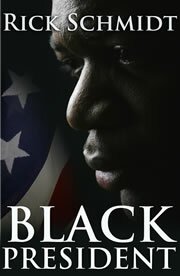
Black President
Judith Ehrlich, Director, "Most Dangerous Man in America, Daniel Ellsberg and the Pentagon Papers"
“I couldn't put it down... Schmidt tells a fascinating story that mixes history with conspiracy theory and sheer fantasy to deliver a jaw-dropping and extremely entertaining read.”
Vin Diesel - Actor
"He (Schmidt) super-empowered me. The book (Feature Filmmaking at Used-Car Prices) changed my life."
Kevin Smith - Writer/Director, Clerks, Chasing Amy, Dogma, etc.
"Without Rick's book (Feature Filmmaking…), Clerks would have been an idea that never made it past this page."
John Lasseter - Writer/Director, Toy Story, Cars, etc.
"Rick Schmidt shows filmmakers how to use these new tools (as discussed in Extreme DV) to realize their visions."
TOTAL POLITICS December 2008, Issue 6
Keith Simpson MP,
Opposition frontbench spokesman,
Foreign Affairs, writes:
Black President Rick Schmidt Picnic, £9.99
Review by Keith Simpson, MP for Mid Norfolk
This novel took several years to come to fruition. The author says he wrote the first draft pre-9/11 and he has now published it at a significantly opportune moment in the history of the US Presidency. Schmidt's novel is in the finest tradition of 'faction' blending historical figures and events with those of his imagination. He uses as his vehicle for the plot JFK's well known promiscuity, and the novel opens with the President's seduction of a devout, married, African-American woman. Within two and a half years of the couples only tryst, JFK is assassinated. The son born of their union rises from poverty to attain America's highest political office. The novel is quite cleverly written and Schmidt skilfully blends fact and fi ction with guest appearances from Marilyn Monroe, J Edgar Hoover and Martin Luther King. MPs will have from the 18 December until 12 January for their Christmas recess, which, in between their family and constituency duties, provides opportunities to relax or stretch the 'little grey cells' with some improving reading.
AMAZON.CO.UK:
Could'nt get a publisher in the United States....go figure ., 4 Dec 2008 By russell clarke "stipesdoppleganger" (halifax, west yorks)
My copy of Black President came with a note from the U.K. publishers( "Pic Nic") stating that this book couldn't get a publisher in the United States which when you consider what has happened recently is both highly amusing and a damming indictment of any publishing houses who turned this excellent novel down,. I mean, talk about not knowing which way the wind is blowing.
Taking in the assassinations of JFK ,Martin Luther King and Robert Kennedy as well the Vietnam War and the 9/11 attacks on the World Trade Centre the narrative skips all over the place but is centred mainly on the result of a brief carnal assignation between John Kennedy and Sarah Little the attractive black niece of a Whitehouse worker who just happens to catch the Presidents permanently roving eye. She find she is pregnant but have the resulting twins Jackson and John actually been fathered by her husband or the President? Black President gives us little new in way of historical or political insight basically re-treading old ground as regards conspiracy theories ( though many of these are now widely accepted as being at least based on some empirical fact) but it does say what it has to say in an entertaining pacy manner. Indeed would say the last third of the book dealing with pure fiction rather than historical events given one persons twist from 2008 onwards is rather cursorily dealt with .It feels rushed. And it ends up relying overly on coincidences that beggar belief. At least one character is entirely superfluous and seems to be included to egg the reader into thinking ..see this isn't so far fetched after all. He believes so why can't you?
This book , I suspect, will not be academic or erudite for many readers .It deals with events in a rather gossipy tabloid manner , revelling in salacious details but I thoroughly enjoyed this romp through the last 40 years of American history . Other than the fact the book ends up with a black president taking over in 2012 it's more soap opera than serious political tome but it's a bloody good soap opera with some of the best characters America has produced over the last forty years.
Red, Black and Blue, 1 Dec 2008 By S. Wolfchild "~*Kitty Cat Ink*~" (between worlds...)
This was requested by accident as I mistakenly thought it to be a biography on the real President-elect: It isn't. It's actually a yarn spun by Rick Schmidt, a screen and guidebook writer now trying his hand at novel writing, plucking some real people and actual events from U.S. history weaving them into something like make-believe.
Let's cut to the chase: I do not recommend this. Why? Because it's basically like a bunch of tabloids strung together with t.v. news reports-sex, violence and an endless stream of assasinations.
I also question the ethics of using real identities; how would any surviving relatives/decendents of those people used here feel about what might be a mockery made of someone in their bloodline? Ironically, there's a danger of the reader hating some of these 'characters' based on fiction, which is just as bad as hating someone different to you because you've been brainwashed into it, which the novel touches on. If Mr Scmidt could've made the effort to make all of the characters fictional, even if they ended up being transparent, alluding to their real counterparts, at least that would've been fair.
It claims to be 'the hottest political thriller of the decade' but instead it's a cold, political non-starter with a made-for-t.v.-movie feel. Its superfluous details burden it and even with just 55 mercifully short chapters, it drags.
Basically, a black beauty is seduced by JFK, knocked up with his twin boys and their unfolding story runs alongside the politcs and conveyer belt of presidents from 1961-2012.
It's a bit like a history tour, diary-ish and meandering, but there's little here that folks aren't already at least vaguely aware of. It feels like it's flogging a dead horse instead of taking the lessons and leaving the past behind. Here, we learn very little if anything. The whole thing seems like a pointless exercise.
It's not for anyone under 17, I'd say, as it contains plenty of strong language and it's graphic in places. It lacks that 'I must have this book to read over and over again' allure, which makes one thankful for libraries.
It's not the worst book ever, the story does set up some interesting juxtapositions and evokes some degree if fascination at times, about the paths people choose and the lives they unltimately create for themselves. For the most part though, I couldn't care enough about any of these characters.
I'll end on this positive: Fannie Flagg or Dan Brown he is not, but Rick Schmidt certainly has talent as a writer and perhaps he'll do better in future.
Rick Schmidt's Official Website :
|
|
|
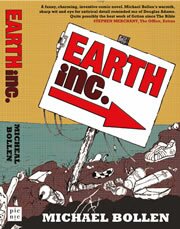
Earth Inc
Stephen Merchant - The Office, Extras
Endorsing Michael Bollen's Earth Inc, Stephen Merchant said: 'Earth Inc is a funny, charming, inventive comic novel. Michael Bollen's warmth, sharp wit and eye for satirical detail reminded me of Douglas Adams. Quite possibly the best work of fiction since The Bible'.
Review by student union magazine TheFoxxHunt
This book is an amazing piece of work that is, if I think about it, a ‘feel good’ book. It may not seem so, but admit it, it’s a guilty pleasure. Even the dedication page at the end is funny. This man has provided us with a rare gem of genius comedy that everyone should read.
www.thefoxxhunt.com
Michael Bollen, gets interviewed:
www.leftlion.co.uk/articles.cfm/id/2836
|
|
|
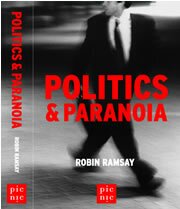
Politics and Paranoia
Paul Foot, John Pilger
Praise for Robin Ramsay's Lobster Magazine
'Now that the British media, like mainstream politics, has become an echo chamber, one of the rays of light is a journal produced from Hull called Lobster. It is journalism at its best: curious, analytical, reliable, wry and indispensable' - John Pilger
'Lobster is one of the most important magazines to be launched in the post Second World war period in Britain. It has covered a long string of stories boycotted by the other media. How has a magazine with no resources been able to do this? By understanding the sinister side of our intelligence services - out of control and careless of the consequences of its excesses' - Paul Foot
FREE Press July-August 2008 7
POLITICS AND PARANOIA, Robin Ramsay
By Granville Williams
If you have read Lobster some of the material in this book will be familiar to you but it is still a good read. It is a collection of talks given by Robin Ramsay to a wide array of organisations - Dallas 63, Chesterfield Labour Party, Leeds Stop The War, North West CPBF, Newcastle University history department and many others.
In his introduction Ramsay describes the genesis of Lobster, which he set up with Stephen Dorril, in 1983 (the pair parted company in the 90s but Ramsey continued to publish). One of the reasons the magazine became an essential read was that in 1985-86 Dorril made contact with Colin Wallace, a former psychological operations officer in the British Army, who was jailed in Lewes prison for a manslaughter he didn't commit, and with British Army Captain Fred Holroyd. Through these sources Lobster uncovered events in Northern Ireland and also plots to defame and ultimately overthrow Harold Wilson's Labour Government. This material was incorporated into Smear! Wilson and the Secret State, a book co-authored by the Lobster duo and published in 1991. During the later 80s and into the 90s the North West CPBF had close links with Lobster. Ramsay and Dorril spoke at public meetings we organised on The Secret State and were joined by Holroyd and Wallace at a CPBF conference on Northern Ireland and the intelligence services.
In the essay from which Politics and Paranoia takes its title Ramsay writes: "There are clandestine influences - conspiracies - at work in society. Not the ridiculous, world-controlling conspiracies like the Freemasons, or the Illuminati, or President Truman meets the aliens, but more mundane things like intelligence agencies manipulating domestic and international politics, companies buying Government policies by making anonymous donations to the Tory party and so forth." It is worth adding New Labour too, which he deals with in one section of the book describing how the party has collapsed into its present "neo-conservative vacuity".
I recommend the book - buy it and you will be supporting small independent publishing too.
|
|
|
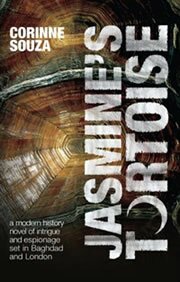
Jasmine's Tortoise
James Brewer, Lloyd's List
'POOR Iraq: its mineral riches have long made it the plaything of the superpowers.
'In the abstract, it might be difficult in this harsh world to be especially sympathetic, but it is moving even unto anger to be given an insight into how the power game has wrecked and ruined families and whole communities.
'This is what Corinne Souza has achieved mercilessly in her forceful "faction" novel Jasmine’s Tortoise, which weaves the unfolding political crisis of Iraq into the warp of world politics (warp, in both senses, being just the right word).
'Her book shows how intelligence-gathering combined with personal greed reached deep into political life in the UK and in the other major powers, and has continued to do so well after the Cold War ended.
'In her book, establishment dirty tricks and cover-ups are threaded skilfully through all 400 pages, which span 37 years, as the author scatters clues that eventually lead to an Agatha Christie-style denouement.
'The book begins with the deep involvement of British, American, Soviet, French and other intelligence agencies in Iraq, a country that used to be a fairly amicable melting pot even under the ruthless rule of Saddam Hussein.
'The better-off families from many ethnicities, including the Jewish and Christian communities, and Sunnis and Shias, lived in friendship at least, and often in harmony, enjoying trips to the races together and grand balls by the Tigris.
'As Souza writes of one spooky protagonist: “His job was to involve others. And betray them if necessary. Even those to whom he was profoundly attached.” Thus even children are cruelly groomed as "sleepers" for activation, and sometimes blackmail, later in their lives.
'Into the whole network feed the freemasons and the Vatican, right up to the Holy Father himself. Everyone is informing on, and deceiving, everyone.
'Some shrewd remarks escape the lips of this devious crew. At a socialite “spies party” in 1965 in Baghdad, the French ambassador forewarns: “America is out of its depth in Iraq.”
'Lloyd’s underwriters of old could be trusted, it is suggested, to agree readily to give cover for shipments of arms to Iraq, for other dubious deals laundered through an international construction contractor, and for sanctions-busting.
'Spies consort with spies and — James Bond-style — shamelessly use bedroom traps, not least in the case of one General Nico Stollen, a charming and know-all agent of the KGB who “makes a welcome addition to London society”.
'Poisoning the Kurdish water supply and murdering a British defence minister is all part of the pattern of Souza’s book.
'We can feel for some of the innocents caught up in the system and have a shred of understanding for some of the operatives.
'But this is an exposure of deep-rooted hypocrisy and is so close to the type of people we know and are expected to respect that it will send shudders of fear and shame down the spine of any decent person."
Review from Lloyd's List, the Leading Maritime and Transport News Portal
G. H. Fraser-sampson
It is fashionable amongst reviewers to refer to a first novel as a "promising debut", but "Jasmine's Tortoise" is much, much more than that.
Corinne Souza handles her subject matter with style and assurance, born it seems of deep knowledge and personal experience. The story ranges across continents and generations and is set against a political backdrop of impressive accuracy. The sheer scope and scale of it is breathtaking.
The writing is of the highest order (how refreshing to find a contemporary novelist who knows how to use a semi-colon, and employs words of more than two syllables) and calls to mind both John Le Carre and C.P.Snow. It will be interesting to see how Souza's style develops into a truly unique voice (which one has little doubt will happen) in future books. Descriptive writing, characterisation and plot are all of the highest order.
I would thoroughly recommend this book to anyone. In turns touching and awful, the story grips you. Yet this is much more than just a good story. It crosses over into the territory of a serious literary novel.
Eliza Drake
I got hooked on Jasmine's Tortoise It was a fascinating insight into a world I hardly knew. A very good period feel with amazing echoes of LeCarre and Graham Greene at times. Once I had got over the shock of the legion of main players at the start I really enjoyed it.
|
|
|
|
|
|
|
|
|